
Montmartre Photoshoot on the Street That Was Named for Stopping
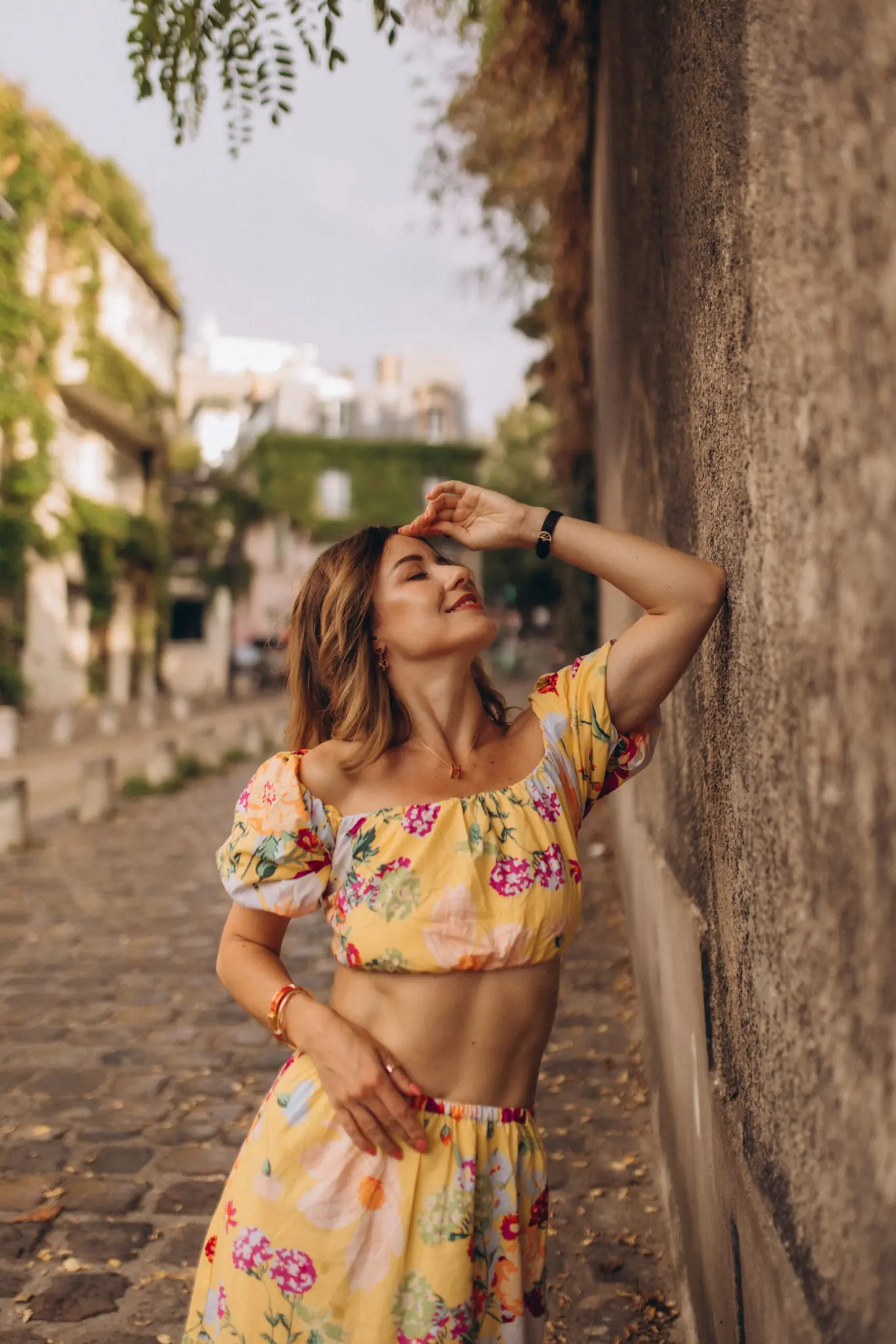
She leaned against an old ivy-topped wall, closed her eyes, and lifted her face to the golden light as though she were drinking it.
5.0 · 41 Google reviewsEnglish-speakingEvery pose guidedPhotos in 7 days
Key takeaways
- Rue de l’Abreuvoir, one of the oldest streets in Paris, is a quiet ivy-lined lane for portraits.
- A warm color like yellow stands out against Montmartre’s soft palette of cream, gray and moss.
- Wear shoes you can truly walk in, because the best corners involve short, uneven climbs.
- You are guided through small movements, a step or a glance back, so no posing experience is needed.
For a few seconds the cobblestones and the leaves and the whole hum of Montmartre softened away, and there was only a woman in a yellow floral dress, alone in Paris, letting herself feel the warmth. She was not posing. She was resting. This quieter frame is the one the story returns to. It shows her pausing between the more directed portraits, with the street still visible around her. A session needs time for both.
Planning your own? See our solo portrait session in Paris.
People imagine a Montmartre photoshoot is about finding the prettiest doorway or the most photogenic staircase, and Montmartre has those in abundance. But the doorway is never the point. The light on old stone, the ivy, the green lamppost, the leaning houses, all of it is only a frame around the one thing that actually matters: a woman giving herself full permission to slow down and be seen. That is what turns a simple walk through the village into a Montmartre photoshoot worth keeping for the rest of your life. Because this session was never really about a beautiful woman in a beautiful place. It was about the rare permission to stop. To have nowhere urgent to be. To notice the light on old stone and let someone quietly keep it for you. The series follows those changes in pace, from walking photographs to closer portraits.
A morning of wandering, told in six frames
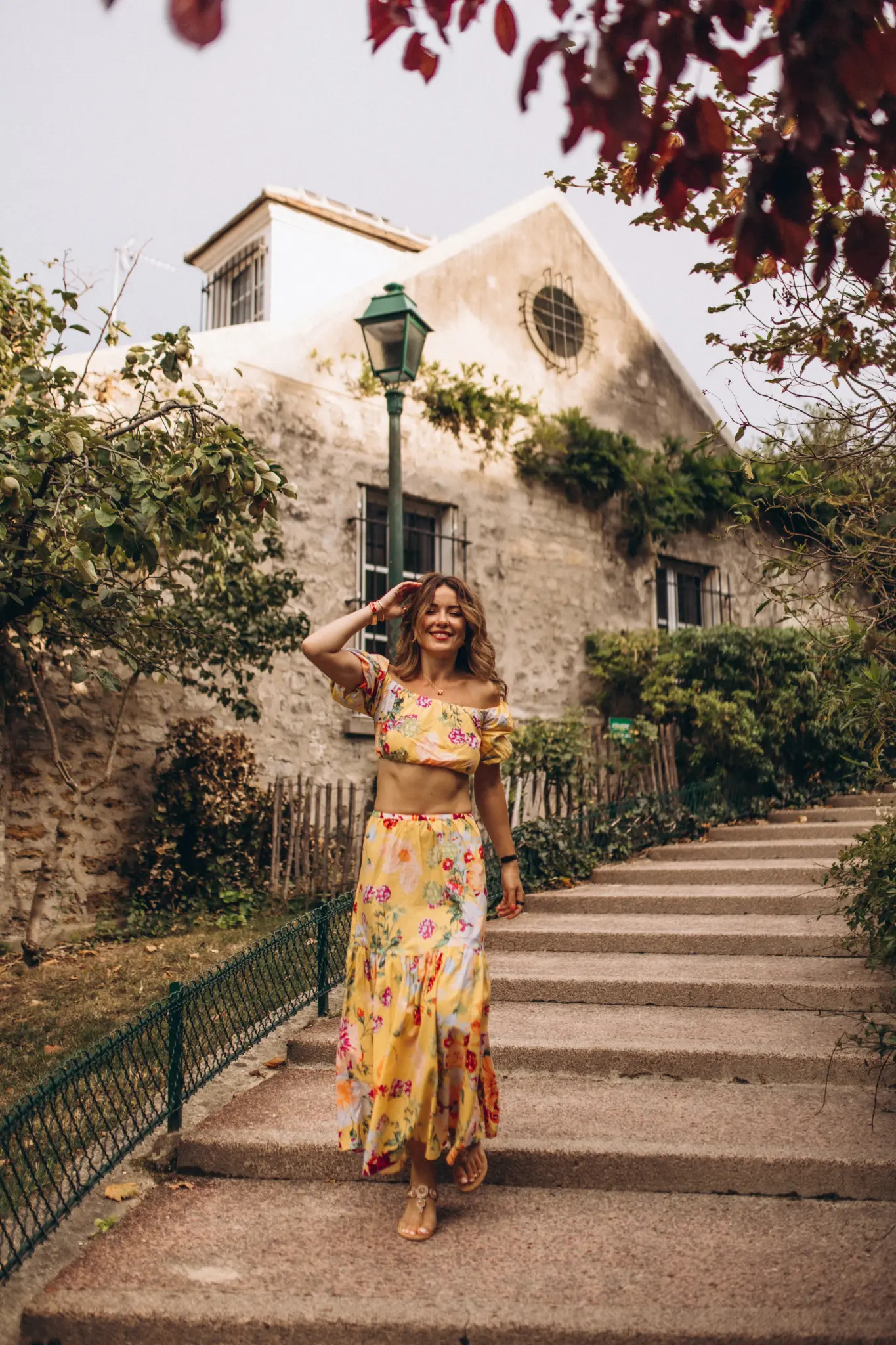
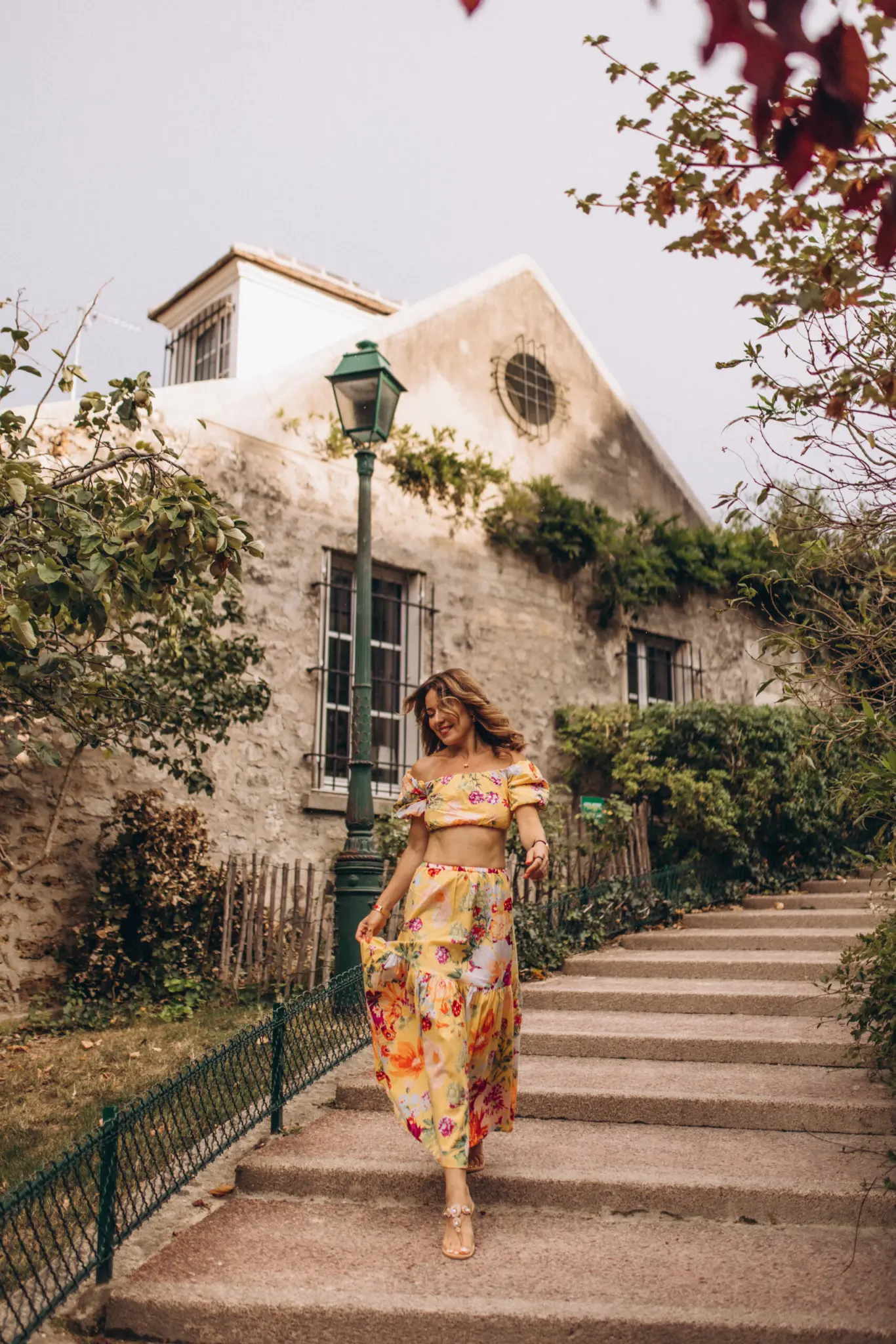
It began on a stairway, one of the old stone flights that thread between the ivy-draped houses the way they have for a century and more. She came down slowly in the flowing yellow set, one hand gathering her skirt, a green cast-iron lamppost standing guard beside her. We love opening a Montmartre photoshoot on steps, because their descending lines carry the eye straight to the person while the leaning houses set the scene without ever shouting over her.
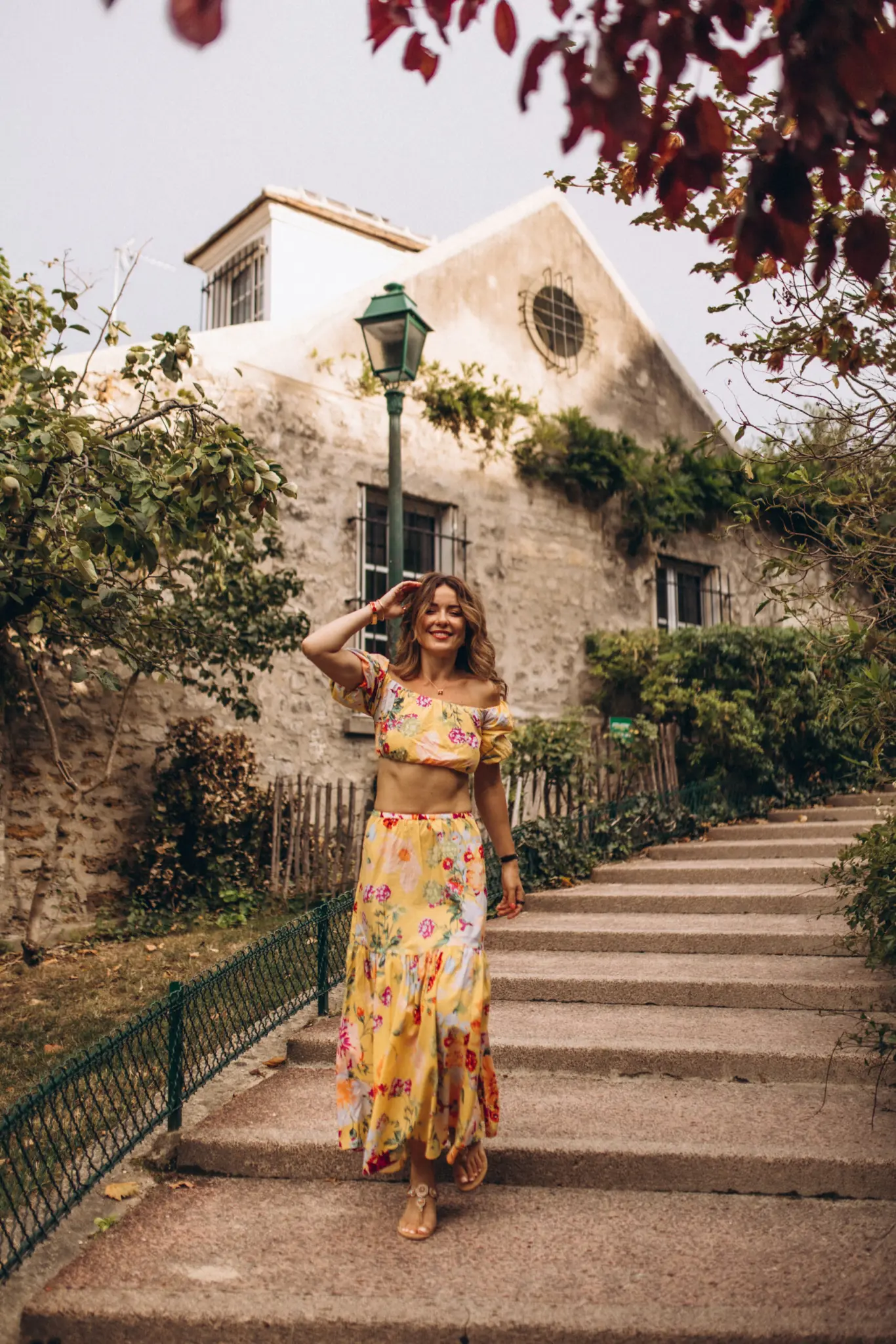
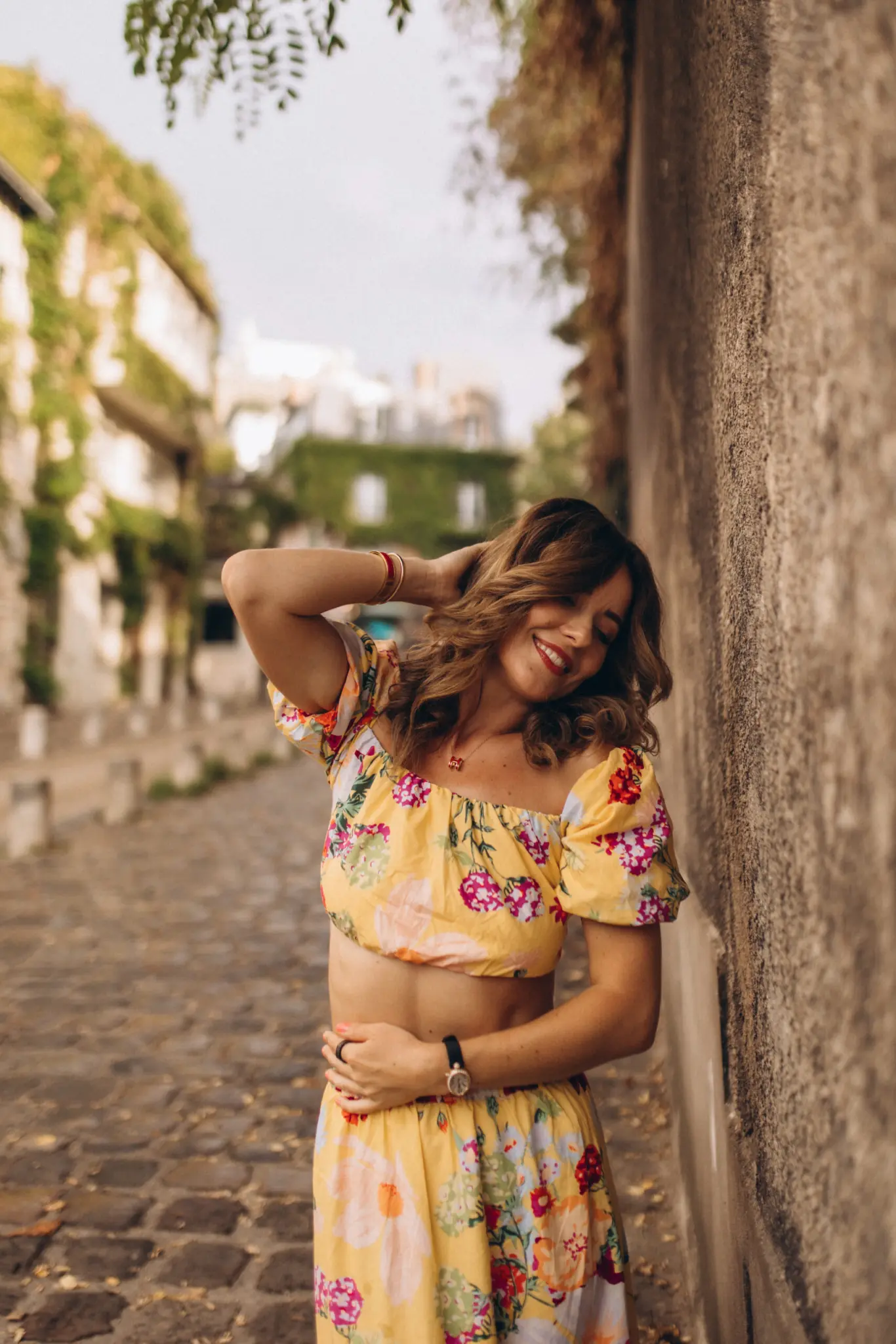
A few steps down, her hand drifted up to her hair and a smile arrived, not for the photographer, not for the camera, but for some private thought the morning had stirred. This is the whole secret of a Montmartre photoshoot taken slowly. When she walks at her own pace, the photographer can follow her movement and look for expressions between the planned portraits. Then a glance back over the shoulder on a green, leafy lane, playful and a little mysterious, the kind of look that makes you wonder where she is going and whether you are invited to follow.
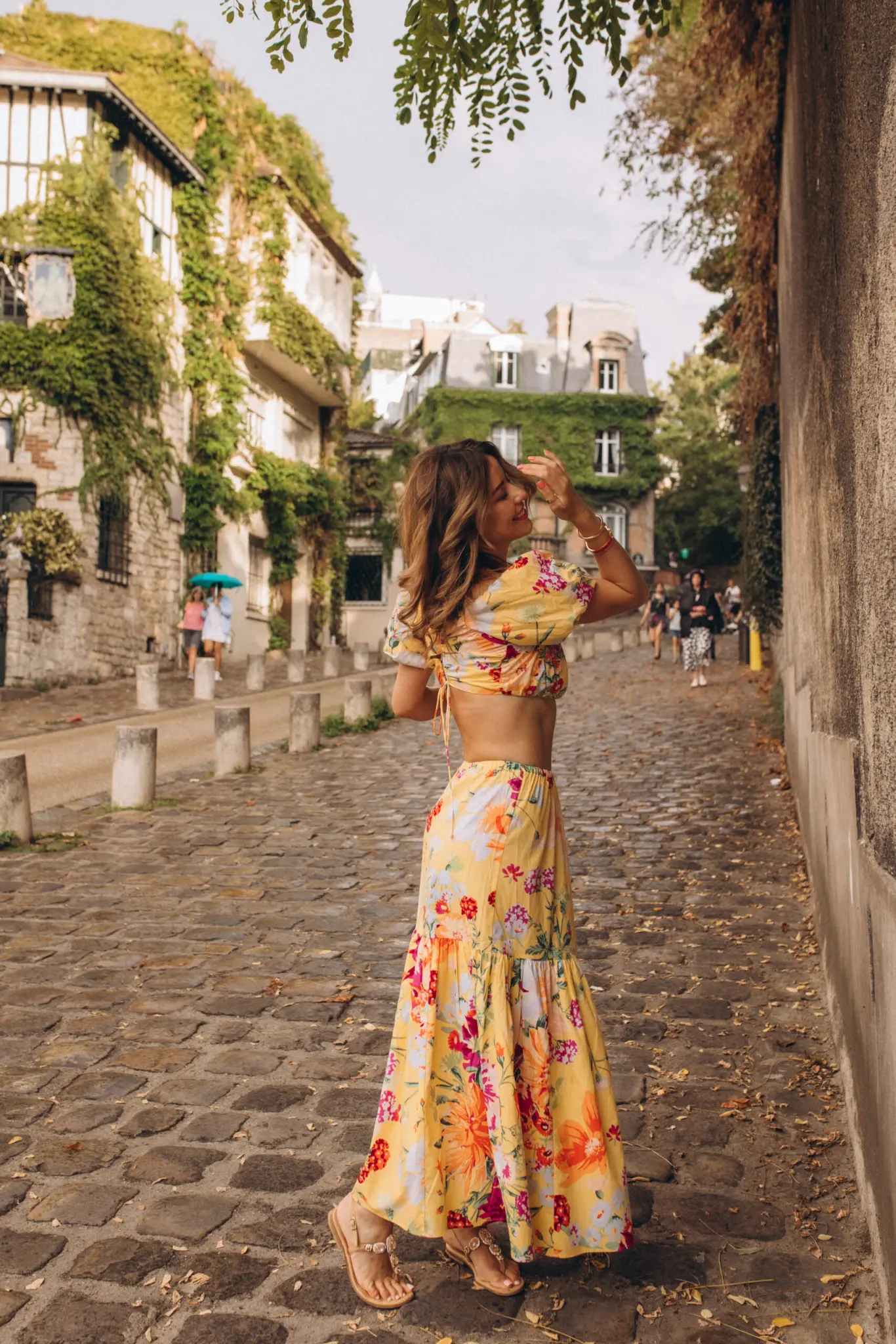
After that came the wall, and the light, and the stillness I already told you about. She opened her eyes, slid a hand into her hair, and smiled down at herself, at the sheer pleasure of being here, being this version of herself, in this place. A relaxed expression like this can make a portrait feel familiar when you look back at it: not one performed for anyone else, but one that belongs entirely to her. And then the last frame, seen from behind, her yellow skirt a bright ribbon against the muted stone as she wandered away down the ivy-lined cobblestones and, eventually, around a corner, gone.
The Story Behind the Street Name
Here is the part that gives this whole Montmartre photoshoot its quiet meaning, and almost no one who photographs here knows it. That final lane is Rue de l’Abreuvoir, one of the oldest streets in all of Paris, first written into the records in 1325. Its name is not decorative. An abreuvoir is a watering place, and for centuries this was the road that led up to the village’s water. The weary cart drivers who hauled their loads up this brutally steep hill would stop right here at the end of the day to let their exhausted horses and donkeys drink and rest before going on.
To see more of the painters who made this hill famous, the Musée de Montmartre on Rue Cortot is a few minutes’ walk from Rue de l’Abreuvoir.
Think about that for a moment. Seven hundred years ago, this exact street existed for one tender purpose: a place for the tired to pause and be restored. A writer named Gérard de Nerval described it in 1854, how the watering hole came alive in the evening, horses being bathed, washerwomen talking and singing in the cool. The trough is long gone, but the street somehow still knows how to make a person slow down.
A street named seven centuries ago for pausing, resting, and drinking in the light. She did all three without ever being told.
That is exactly why a Montmartre photoshoot on this lane means so much. When she closed her eyes against that old wall and let the sun pour over her, she was doing the oldest thing this street has ever asked of anyone. She was stopping to be refreshed. The little pink house just around the way, La Maison Rose, painted that color over a hundred years ago and immortalized by the painter Utrillo, watched a thousand artists do the same. Montmartre has always been a hill where people come to catch their breath and make something beautiful out of the pause.
Rue de l’Abreuvoir runs from Rue des Saules, where La Maison Rose stands on the corner, down to the little Place Dalida. Stand at the Place Dalida end and look back along the street, and on a clear morning the white dome of Sacré-Cœur rises above the rooftops at the far end. It is the view most people come for. Come early, when the street is quiet and the light slides along the façades; by midday it fills with walking tours.
Why a woman should let herself be photographed alone
There is a particular courage in booking a Montmartre photoshoot only for yourself. Not as a bride, not as half of a couple, not as the mother behind the camera at everyone else’s milestones. Just as a woman. You can see the flicker of it when women arrive, a little apologetic, as if beautiful photographs need an occasion to justify them. A Montmartre photoshoot just for you needs no occasion at all.
They do not. During solo portrait sessions in Paris, we often find that the ones who book a solo session are the ones who need it most. They have spent years being photographed at events they did not choose, in clothes they did not pick. A Montmartre portrait photoshoot hands all of that back. For an hour or two you are the only subject, the only story, the only reason the camera exists. You choose the dress, the pace, whether to laugh or close your eyes or simply walk and say nothing at all. These photographs are not vanity. They are recognition. They give you photographs of yourself in a place you chose to visit, even when you made the trip alone.
If you feel nervous about that, you are in good company, and it changes nothing. Your photographer guides every movement gently, a step, a glance back, a hand to the hair, so you never have to arrive knowing how to pose. A photoshoot in Montmartre asks only that you show up as you are and let the hill do the rest.
Sunny yellow against pale stone and green ivy
A word about the dress, because it mattered more than she probably knew. Montmartre’s palette is soft and old, cream and gray and moss and the muted pink of a house or two. Drop a warm, joyful yellow into that landscape and it does not fight the surroundings, it wakes them up. The floral print quietly echoed the climbing vines, the long tiered skirt turned every step into movement, and the light seemed to love her for it. That is the aim of styling a Montmartre photoshoot: not to match the place, but to have a conversation with it. On these slopes and cobblestones we always add one gentle piece of advice too, bring shoes you can truly walk in, because the most beautiful corners are usually a short, uneven climb from the last one.
The best photo spots in Montmartre
The main Montmartre sights are within walking distance, but the hill, steps and stops for photographs take time. Start with a small route rather than trying to fit every location into one session.
- Rue de l’Abreuvoir and La Maison Rose. The lane from this story, with the pink house on the corner and the dome of Sacré-Cœur at the end of the view.
- Sacré-Cœur from the steps. The basilica, gardens and city view give several angles. Early morning can be quieter; check the garden gates and keep routes clear for visitors and worshippers.
- Rue Foyatier. The long staircase beside the funicular, with lamp posts down the middle. Beautiful in black and white.
- Place du Tertre. The square of painters and easels. Come early, before the restaurant terraces fill it.
- Le Consulat. The corner café on Rue Norvins with its red awning, one of the most photographed façades on the hill.
- The Mur des Je t’aime. A wall of dark blue tiles with “I love you” written in more than 250 languages, in a small garden on Place des Abbesses.
- Le Passe-Muraille. The statue of a man walking through a stone wall on Place Marcel-Aymé, a playful frame for a portrait.
- Villa Léandre. A quiet lane off Avenue Junot with brick houses and climbing plants. People live here, so keep it short and quiet.
If you love cafés, our café photoshoot in Montmartre story shows another side of the hill. For a proposal here, see where to propose in Paris.
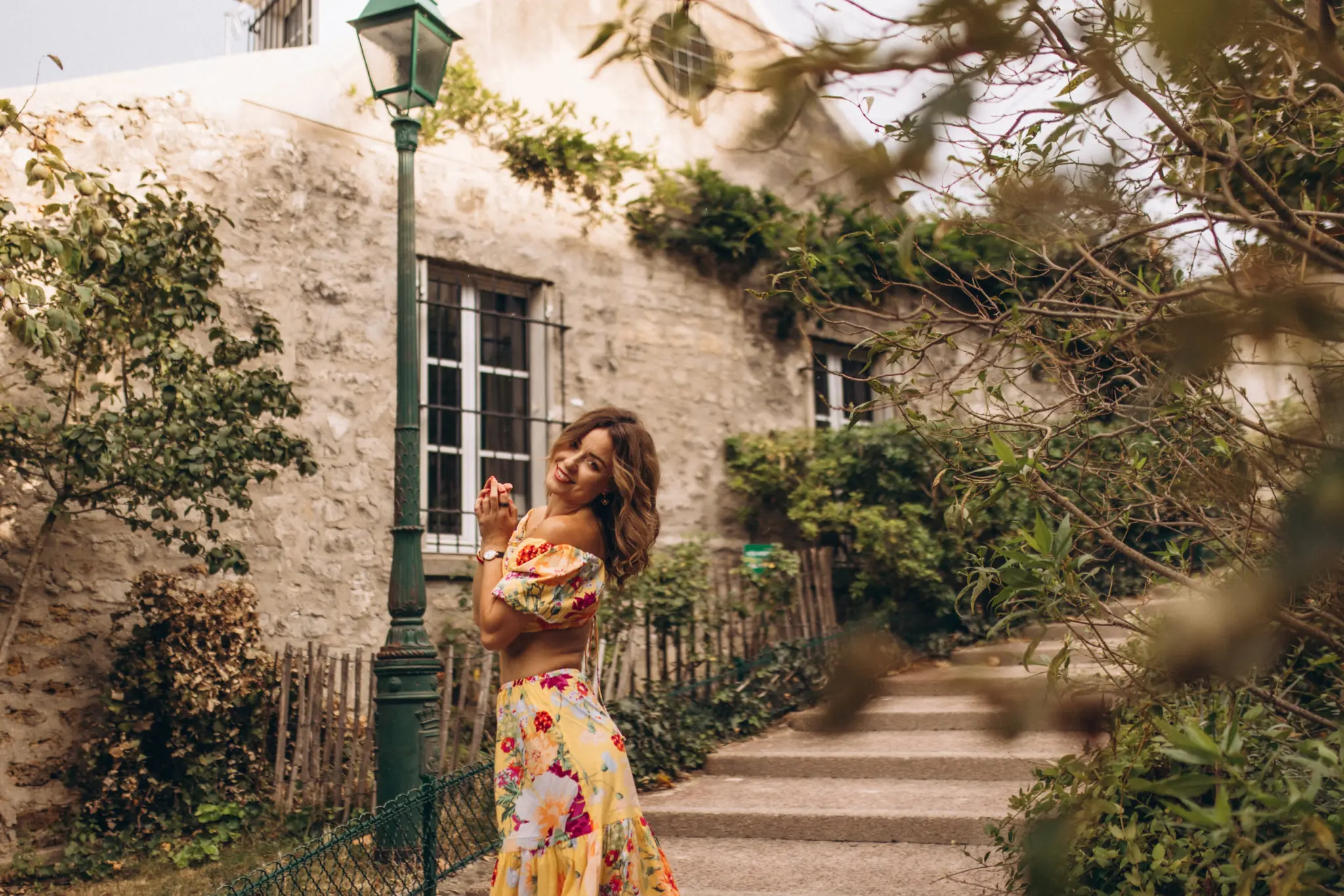
A Moment on Rue de l’Abreuvoir
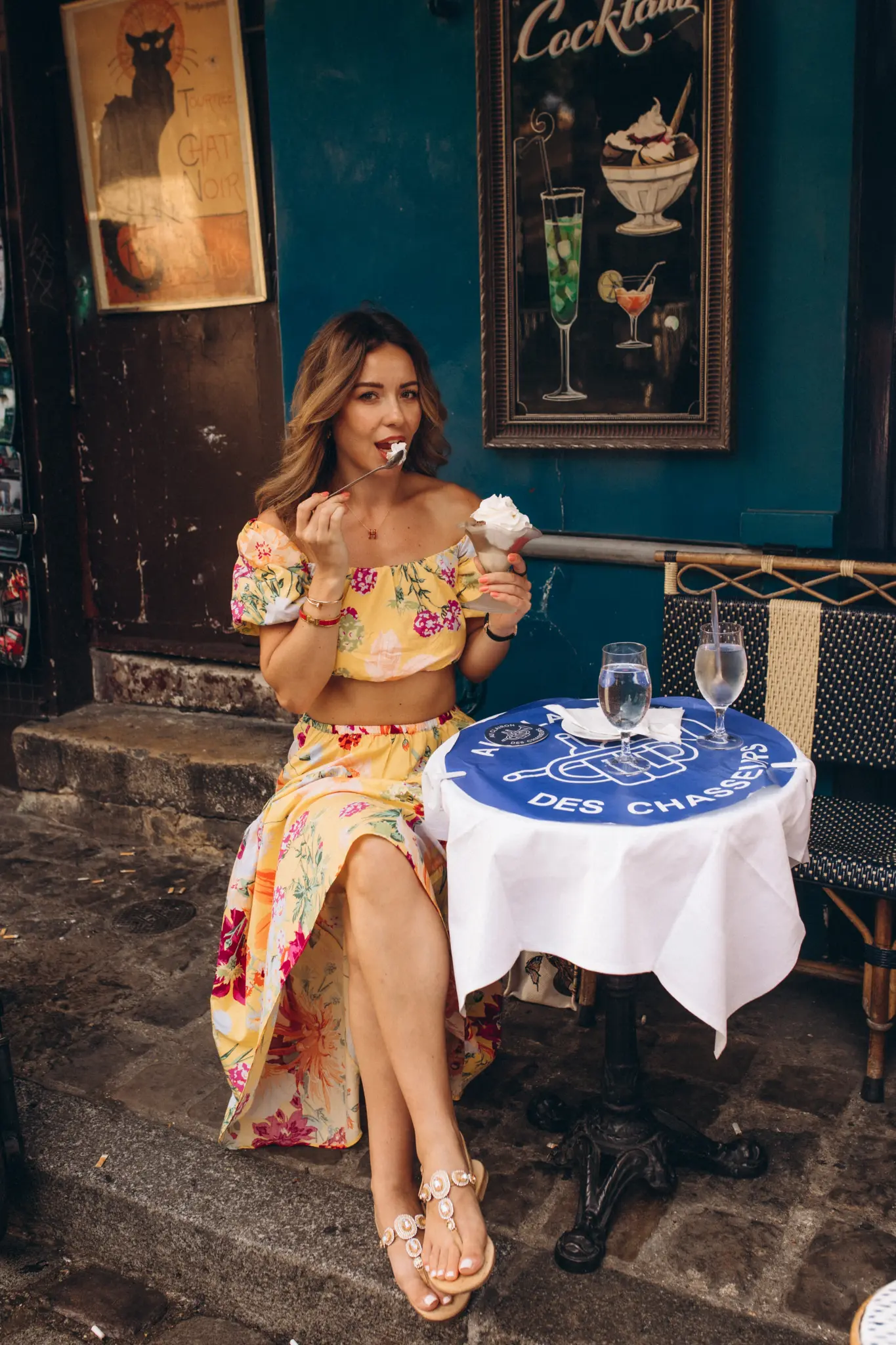
On Rue de l’Abreuvoir, she pauses in a yellow dress against pale stone and green ivy. The last frame is quieter than the walking portraits, bringing the morning to a natural close.
For a longer walk around the village, the Paris tourist office suggests a route for strolling Montmartre.
For your own Montmartre portraits, visit our Paris portrait photographer page. We will help you choose a route that suits your pace, and your photographer will guide you through the session.
Questions
What is the prettiest street in Montmartre?
Our favorite is Rue de l’Abreuvoir, a quiet ivy-lined lane first recorded in 1325 and one of the oldest streets in Paris. La Maison Rose, the pink house painted by Utrillo, is just around the corner.
What is so special about Montmartre?
It still feels like a village on a hill, with stone stairways, ivy-covered walls, green lampposts and cobblestones, and a long history as a home for artists. Wear shoes you can walk in, because the prettiest corners are short, uneven climbs apart.
What famous artist lived in Montmartre?
Maurice Utrillo painted La Maison Rose here, and the Musée de Montmartre on Rue Cortot keeps Suzanne Valadon’s studio and the Renoir gardens. It is a short walk from Rue de l’Abreuvoir if you want more of the hill’s artists after your session. See our Paris portrait photographer page for solo sessions like this one.
Where is the best view in Montmartre?
The steps below Sacré-Cœur look out over the whole of Paris. For a view of the basilica itself, stand at the Place Dalida end of Rue de l’Abreuvoir and look along the lane.
What is the best time for a Montmartre photoshoot?
Early morning can be a good choice for fewer visitors. The light, café opening times and access to gardens vary, so plan around the date and the spots you want.
Booking, payment, weather and delivery: see all questions.
Written by Julia Litvin
Julia Litvin helps plan Paris sessions with our local photography team, from choosing a route to preparing for the shoot. More about Julia
Plan your own session
Tell us when you are in Paris and what you have in mind. We reply within a few hours with free times and a route idea.
WhatsApp +33 7 49 91 48 79
Email info@litvinphoto.com